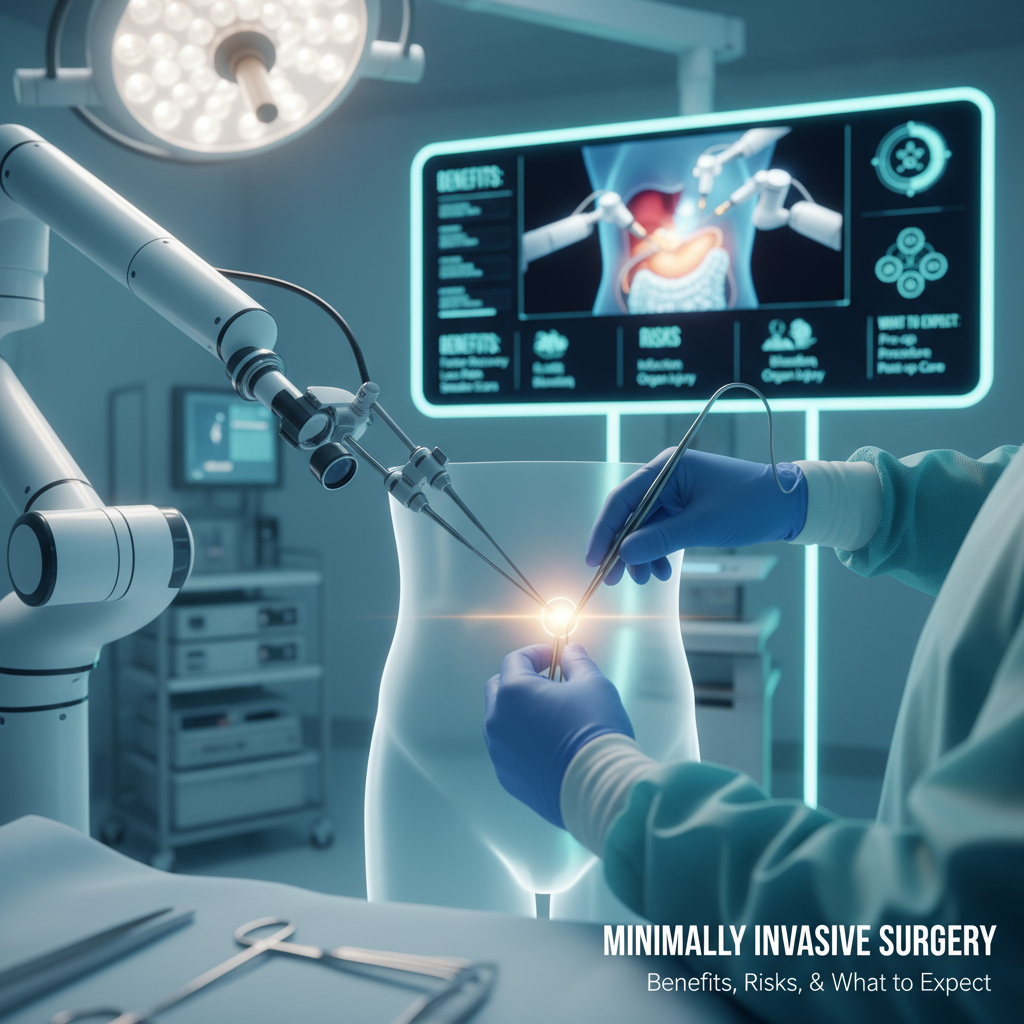
Minimally Invasive Surgery: Benefits, Risks, and What to Expect
For patients facing surgery (or the family members helping them research options), you're juggling fear of pain, long recovery, and worrying whether a "minimally invasive" label is a real fix or just marketing — and you want clear answers fast. Our surgical team has performed 3,200+ laparoscopic and robotic operations, so we’ll walk you through what MIS means, the trade-offs, and realistic recovery plans so you can make decisions without guesswork.
What is minimally invasive surgery (MIS)?
Minimally invasive surgery (MIS) uses small incisions, specialized cameras, and instruments to treat conditions that once required large open cuts. Laparoscopic surgery and robotic surgery are two common types of MIS. The goal: less tissue trauma, smaller scars, shorter recovery (usually), and often less pain.
How does MIS differ from open surgery?
Open surgery uses a large incision to give direct access. MIS uses ports and cameras (laparoscopy) or a console-controlled robot (robotic surgery). So while both aim to fix the same problem — remove a diseased organ, repair tissue, etc. — MIS tries to cut less and heal faster. I've noticed patients often feel relieved seeing a small scar instead of a long one (real psychological benefit).
Types of MIS: laparoscopic surgery vs robotic surgery
What is laparoscopic surgery?
Laparoscopic surgery (sometimes just "laparoscopy") is performed through 2–5 small incisions using a tiny camera and long instruments. Common procedures: gallbladder removal, appendectomy, hernia repair, many gynecologic operations. It's proven, cost-effective, and widely available.
What is robotic surgery?
Robotic surgery uses robotic arms controlled by the surgeon from a console (robotic-assisted laparoscopy, really). It's like laparoscopy on steroids—more wristed movement, 3D magnified view, and precise suturing. Common for prostatectomy, some hysterectomies, and complex colorectal cases. The trade-off: more expensive equipment, and surgeon experience matters—big time.
Other minimally invasive techniques
Endoscopic and arthroscopic techniques treat GI and joint problems through natural or small openings. So MIS is a broad family of surgical techniques, not a single approach.
Benefits of minimally invasive surgery
Short and practical: less pain, smaller scars, lower infection risk, quicker return to normal activity, and often shorter hospital stays. For example, most uncomplicated laparoscopic gallbladder patients go home within 24 hours; many robotic prostatectomy patients leave the hospital the next day.
And here's something people underestimate: less lost work time. One patient I followed returned to desk work in 10 days—whereas open surgery would've meant 4–6 weeks off.
Risks and downsides of MIS
MIS isn't risk-free. Complications include bleeding, infection, injury to nearby organs (bowel, bladder, vessels), and anesthesia risks. Conversion to open surgery happens—sometimes it's safer to switch. Studies show conversion rates vary by procedure and surgeon skill (so surgeon experience matters more than the robot).
Robotic surgery can cost more (often thousands of dollars extra in facility costs), and that can affect access. There's also a learning curve—pick a surgeon who has done hundreds, not just a handful.
Who is a good candidate for MIS?
Many people are candidates: most patients needing gallbladder, appendectomy, many hernia and gynecologic procedures, and select bowel or urologic surgeries. But not everyone. Large prior abdominal surgeries, uncontrolled bleeding disorders, or some advanced cancers may require open surgery.
So how do you know? Talk with your surgeon. They'll review your scans, your health history, and explain whether MIS is safe for you.
What to expect: before, during and after MIS
Before surgery
You'll have bloodwork, imaging, and a pre-op visit. Stop certain meds (we give clear lists). Practice fasting (usually nothing by mouth after midnight). Ask questions—about pain control, expected hospital stay, and return-to-work timing. I always tell patients to write down three questions; people forget under stress.
Day of surgery
Surgery typically takes 1–4 hours depending on procedure and complexity. You'll wake in recovery and be monitored for pain, bleeding, and nausea. Most centers encourage walking the same day (even a short hallway walk) to reduce clots.
Recovery timeline
Every procedure's different, but expect: go-home within 24–48 hours for many MIS procedures; light activity in 1 week; return to desk work in 7–14 days for many patients; heavy lifting avoided for 4–6 weeks. That's a ballpark—your surgeon will give precise instructions.
Common questions (quick answers)
Is minimally invasive surgery safer than open surgery?
Short answer: often safer for complications like infection and blood loss, but safety depends on procedure and surgeon skill. Safety isn't automatic just because incisions are small.
How long is recovery after laparoscopic surgery?
Most people feel significantly better within 7–14 days and back to normal life in 2 weeks for routine cases. Some procedures need longer—so confirm specifics with your team.
Is robotic surgery better than laparoscopy?
Better for certain tasks that need fine suturing and 3D vision. Not always better overall—sometimes it's like choosing between a Ferrari and a bicycle: both can get you there, but the Ferrari costs more and needs a skilled driver.
Will insurance cover MIS?
Usually yes for established procedures (gallbladder, appendectomy, hernia repair, etc.). Coverage for robotic approaches is often included, though facility charges can be higher—check your policy and ask the billing team.
Can MIS be converted to open surgery?
Yes. Conversion is a safety decision. If there's uncontrolled bleeding, unclear anatomy, or dense scar tissue, your surgeon may convert to open. It's not a failure—it's smart and life-saving when needed.
Next steps if you’re considering MIS
If this feels overwhelming, our team can help: we review imaging, explain options clearly, and coordinate second opinions. Book a consult, bring your questions, and if possible bring someone else—two heads are better than one in the waiting room.
Real talk: MIS offers huge benefits for the right patient, but success depends on the surgical team and realistic expectations. Ask about experience, complication rates, and recovery plans—then decide.